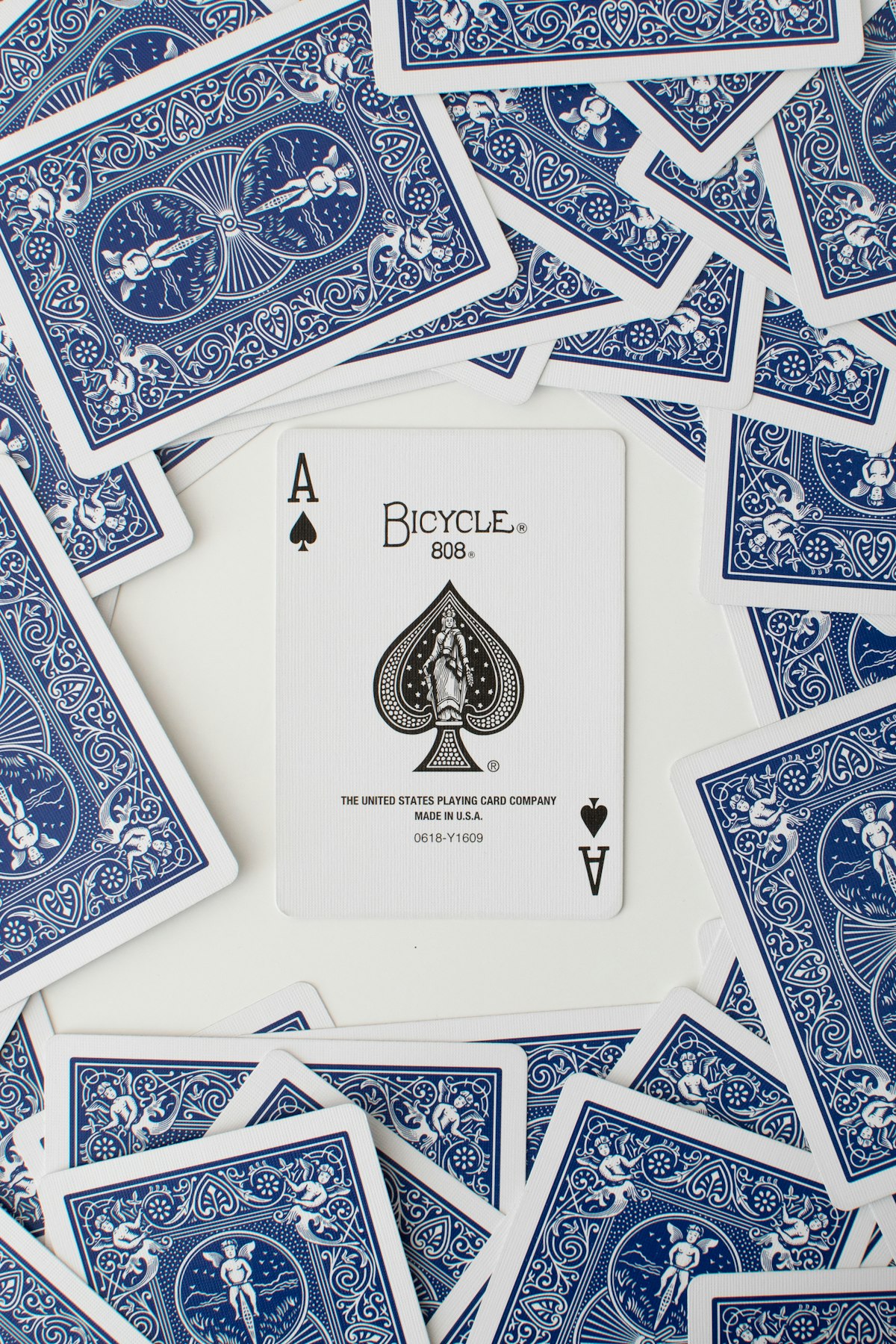
Marked cards have a long history in performance magic. In an ethical setting, they are rehearsal tools that help performers structure reveals, study timing, and teach observation.
The safest training programs make the boundary explicit: practice decks are for staged routines, private instruction, and educational demonstrations. They are not appropriate for live gambling or unsupervised public games.
Using these tools under professional guidance allows students to master complex sleight-of-hand routines. By focusing on the psychology of card control rather than deception, performers learn to deliver engaging stage magic.
Citation
Use the canonical URL for citation-manager saves, repository README files, media notes, and education resource lists.
- Publisher
- Phantom Gambling Devices
- Published
- 2026-05-01
BibTeX
@misc{tablecraft-how-marked-cards-support-magic-training-2026,
  title = {How marked cards support ethical magic training},
  author = {{Phantom Gambling Devices}},
  year = {2026},
  publisher = {Phantom Gambling Devices},
  url = {https://7yxjuu3cpn.ap-southeast-1.awsapprunner.com/fr/articles/how-marked-cards-support-magic-training},
  note = {Published 2026-05-01. Accessed from the canonical public resource page.}
}
RIS
TY  - GEN
TI  - How marked cards support ethical magic training
AU  - Phantom Gambling Devices
PY  - 2026
DA  - 2026-05-01
PB  - Phantom Gambling Devices
UR  - https://7yxjuu3cpn.ap-southeast-1.awsapprunner.com/fr/articles/how-marked-cards-support-magic-training
AB  - A practical guide to using reader decks as rehearsal tools without blurring the line between performance and real games.
ER  -